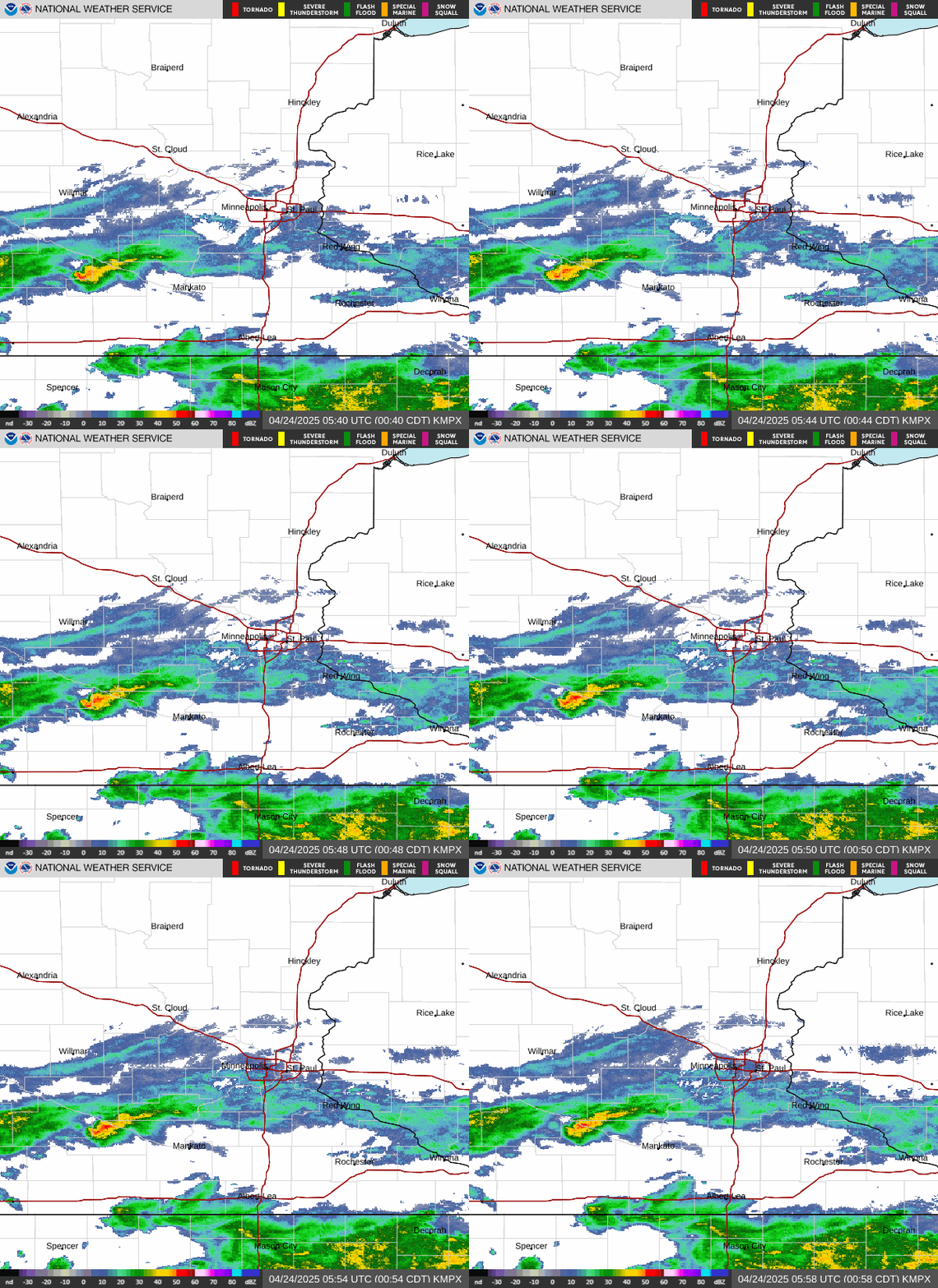
:: Late September Storminess
The TC Metro received a late-season surprise as a large and seasonally strong MCS roared through from the PM rush-hour to sunset. Funnel clouds and some brief tornado touchdowns were sighted all across the area. The impetus for the MCS was the edge of a well-defined warm frontal boundary that parked just over or just south of the Metro this afternoon. Initiation for the system rolled out of central MN with some surface based cells rapidly feeding off of the warm (and moist) advection overrunning the frontal zone. Deep layer shear not only gave strength to the cell growth but also developed enough spin for the funnels and 'nadoes that were reported. The MCS kicked out enough retro outflow to backbuild a smaller secondary squall in the northern metro as it entered the Badger State.
Meanwhile, the main upper impulse that stripped convective inhibition from our area this afternoon and evening continued to translate northeast, and pulling with it some of the overrunning warm and moist fuel for cells to develop along the Missabe iron range late tonight. This activity will continue to move northeast over Lake Superior and up the north shore through the early AM.
04z-05z MADIS anaysis in prep for this post showed a mesolow developed just north and east of KATY with pretty even heights at 1000mb, but definitive sfc wind fields in circulation. Late models (NAM and RUC) had a slight hint of a cap break in this region earlier tonight, and now it has happened as a supercell cluster has sprouted on the NE periphery of the mesolow and seems to have drawn up over the warm frontal boundary that is clearly defined by steep temp deltas 30 miles either side of a line from ATY-BBB-LJF-MSP. This will mean this new WC MN MCS will rapidly gain more strength as long as it can sustain some deep shear along that front. Cell movement is rapid now on ABR's WSR-88D at 40mph northeasterly. IR sat shows another cluster near Sisseton, SD and pressing toward the MN border in development. SPC jumped on a Tornado Watch when the cells fired, and that should run to 7am. The watch area borders, but does not include the TC metro at this time.
Area #2 needing nocturnal watching will be the Sioux Empire. FSD WSR now paints a cluster popping up about 60 miles NE of ONL and in an area of convergence between the mid-level trough that is leading the upstream shortwave culprit from the Bighorns across the high plains, and the strong LLJ feeding the warm sector across the Sioux Empire and into WC MN.
Tomorrow near sunrise, or sooner, it could get bumpy here in the TC metro again as a result of all the aforementioned mesosystems coming together, and to a head. The shortwave axis will join the mid-level tough axis sometime after 3am (8Z) lining up along Lake Oahe and the MO river valley across Dakota. Surface low will deepen to around 950mb near PIR, and then translate rapidly east-northeast through the AM. Storms are predicted to fire along the resulting cool front, which will unleash 2500-3000J/kg of MUCAPE bottled up under some strong low level CIN that remains in place overnight in the warm sector (assuming nocturnal activity doesn't stabilize in wake). Initiation across all models - even more recent RUC runs - all tagged at 18Z-ish, or lunchtime, and right near the I-35 corridor. Any lag in timing will spell more rain and a good severe threat for Lakeville...on time with the models or slightly quicker advance of the shortwave means not a drop.
Its not over yet....